Catapult Books
A Conversation With PEN America Best Debut Short Stories 2018 Author Elinam Agbo
“I love that our stories are beginning to get the attention they deserve, but that’s not enough for me. I want more.”
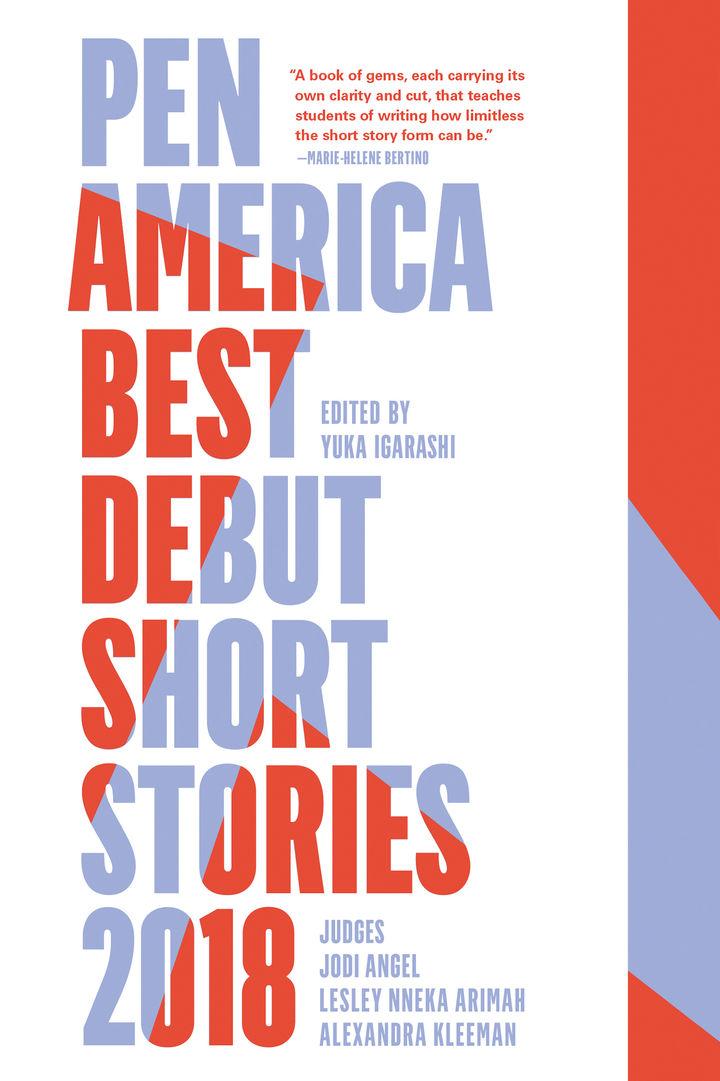
On August 21, Catapult published PEN America Best Debut Short Stories 2018 , the second edition of an anthology celebrating outstanding new fiction writers published by literary magazines around the world. In the upcoming weeks, we’ll feature Q&As with the contributors, whose stories were selected for PEN’s Robert J. Dau Short Story Prize for Emerging Writers and for the anthology by judges Jodi Angel, Lesley Nneka Arimah, and Alexandra Kleeman. “1983” is set during a time of economic and political strife, when the Nigerian Aliens Expulsion Order sent millions of Ghanian migrants home from neighboring Nigeria.
*
Elinam Agbo moved to the United States from Ghana when she was ten and has since lived in Nevada, Kansas, South Carolina, and Illinois. She received her BA from the University of Chicago, where she won the 2017 Les River Fellowship for Young Novelists. She is currently an MFA candidate in the Helen Zell Writers’ Program at the University of Michigan.
*
If not for the white Harmattan fog and the orange stars hovering over my eyes, I would have recognized Efua Agbezuge on the gravel road. Instead I squinted at the undulating shape, a dark vertical line with a glow, a full-body halo. It was a thirsty morning in December. Around the shimmering figure, hibiscus petals fell like slabs of shriveled flesh. The spiny remains of a rosebush snarled at anyone who passed it. No roosters crowed.
I was returning from a pond deep in the woods, where I occasionally found fish. I had not had any success in days and was wondering if I would need to try even earlier tomorrow. The sky turned from indigo to tangerine during my trek home, and daylight shone on my soiled hands and feet. I saw Efua—or rather, the shape of her—when I looked up from scraping the mud off my sandals. I immediately thought her a spirit and veered my wheelbarrow through a forgotten farm to avoid the encounter, trampling over cornhusks and cassava sticks. I was too disappointed to be haunted by an angel, too weak and empty to be bothered by a ghost.
*
Catapult: Where did you find the idea for this story?
Elinam Agbo: Every time I see my mother, she recounts at least one event from the past. When the story concerns her life—either experienced first-hand or witnessed, in one form or another—it is a re-telling. They are repetitions, though repeated tales are rarely identical. The day I began writing “1983,” I was home for Winter Break, contemplating what I would do after college (I was in my final year) if MFA applications didn’t work out. I had taken a break from revising an older story when I overheard a conversation between my parents and some family friends: something about the expulsion of Ghanaians from Nigeria. Later that day, I asked my mother for details, and what she gave me was a story I had heard many times before. But I had never paid much attention. The story I knew was that my mother had lived through a famine while teaching in a village; what I missed earlier was the political context.
My knowledge of familial history is limited, but in a culture marked by silence, my mother’s voice is loud. I know the little I know from whispers, but also from her many retellings. The line between writing what you know and what you don’t is a strange phenomenon to me. What I know is also what I do not know, and I know myself least of all. I have always been drawn to stories about estrangement, from oneself, from the past, from family. Perhaps this is because my experience of family has been one of separations, generations of separations, and I am drawn to stories with similar preoccupations.
When I started “1983,” I wanted to write a story about a mother and a daughter. But I also wanted to write a story about mythmaking. What drives us to create origin stories, and what stories do we frame our identities around? The narrator, Rose Adzo Gameli, wants to know herself, and as I lingered in her unknowns, I began to ask: What does it mean when a daughter searches for a mother who is searching for herself? Can one ever know the other?
In “1983,” Adzo explains that she “left for the capital at sixteen, in search of answers that were not hidden in lore. Answers that would lead me to a cure and a future . . . I felt emptied of faith regarding blessings and curses alike.” And yet, the story Adzo’s grandmother tells continues to provide a point of reference for understanding her family. What do you see as the role of “lore,” of traditional storytelling, in your own work? In today’s world in general?
We live in a world of movement. We are people who move. When we move, we carry stories with us. I think of migration as a default state because change is inevitable and stability is something that we are always reaching for. I think the idea that stability itself is the default is an illusion. When I find that I do not belong in a space, I search for familiarity in stories—these may come from the people around me or they may come from strangers. Storytelling helps me situate myself. Am I a witness or a participant? If I am a witness, what role do I play in the lives of others? And if I am participant, how important is my voice?
What do you make of the recent trend in authors of West African origin publishing in the US and UK? Do you see yourself following the tradition of Yaa Gyasi, Chinelo Okparanta, Leslie Nneka Arimah, and others?
I tread carefully around words like “trend” and “tradition,” particularly in the context of marginalized voices and writers in the diaspora. I love that our stories are beginning to get the attention they deserve, but that’s not enough for me. I want more. I don’t want this to be a trend because trends end.
As someone who reads and writes across genres, I am nervous about the questions that arise when I depart from realist stories about my origin. I find myself wondering, can I place my vampire story alongside the story about the immigrant family? Am I allowed? But this fear hinders expression. A hesitant hand (as opposed to a deliberate one) can shake the foundations of a story, eliciting doubt in the reader, and the writers you have mentioned are among those who inspire me to stop asking permission. I look to Leslie Nneka Arimah and Helen Oyeyemi, for instance, as writers who move seamlessly between genres, giving their fantastical worlds as much attention as the worlds we know. Similarly, Akwaeke Emezi’s debut Freshwater is a confident departure from the “rules.” So if tradition here refers to a path that inspires artistic freedom in the margins, then I definitely see myself following in their footsteps.
How long did it take you to write this story?
I finished the first draft within a few days and revised it for about a year. The moment in writing when a story starts to come together can feel serendipitous—the right combination of sentences, then paragraphs, after months or years of trying out the idea in various forms. In the case of “1983,” my MFA application deadlines were coming up, and I was writing story after story and while there were some nice sentences, none stood out to me. Then I heard the conversation that sparked my inquiries, and I shut myself in my room until I finished. I remember I wanted my mother to hear me read it—that was my first goal, to get it to a point where my mother would read and engage with it.
How has the Robert J. Dau Prize affected you?
I received the news at a time when I was struggling to write. I had begun to question whether I deserved to be in the MFA, whether I had made the right decision. The first thing the news did was to remind me why I write. Recognition, particularly from an unexpected place, can remind us that our words have reach, something that is difficult to imagine when we are alone with our characters. I have been incredibly lucky to have a support system of mentors and friends who see value when I am often blind to the value in my work, and the prize has taught me to trust their judgment.
What are you working on now?
I am continuing to explore the larger thematic questions of “1983” in a novel and some short stories. There are many kinds of separations, separations between people and between worlds—the real and the surreal.
Finally, where do you discover new writing?
I find stories through friends, literary magazine newsletters, and Twitter.